The War Is Over. Good Manners Stole Our Dinner.
From longevity tourism to countercultural dinner rituals, Claudio Morelli explores how even our differences become standardised—and why the time we linger after a meal might still leave room for conflict, surprise and ways of being together that serve no purpose.
The War Is Over. Good Manners Stole Our Dinner.
From longevity tourism to countercultural dinner rituals, Claudio Morelli explores how even our differences become standardised—and why the time we linger after a meal might still leave room for conflict, surprise and ways of being together that serve no purpose.
Published October 1, 2026
Author: Claudio Morelli Co-founder, reversocollettivo
Credit image: Ludovic Avice / Unsplash
In Sardinia, I was invited to Mamatita, a performing arts festival that has been populating Alghero every summer for some years now. My friend who works there made sure to inform me that there was “a guy who makes excellent kombucha”. Kombucha is a lightly sparkling fermented Asian drink which, for some strange reason, has been quenching the thirst of the radical left and the creative class of our time for the past few years.
Alghero, meanwhile, is a Catalan-founded stronghold by the sea which long preserved a language closer to the one spoken in Barcelona than to that of the rest of Sardinia. Along the seafront, beyond the walls, where ancient cannons and catapults give way to an open view of the road to Bosa, a sandwich small enough to fit in the palm of your hand starts at €12. In the old town, a single block can feature as many as four ice-cream and numerous souvenir shops, seasonal “traditional” restaurants and some commercial spaces given over to self-service machines selling drinks and packaged food.
In 2025, Alghero recorded more than 1.8 million tourist nights, in a small city of 40,000 inhabitants. On a separate note, groups of citizens, most of them elderly, put together informal actions with almost no money, defending the area’s old traditions, often in its historic local language. Institutions lend their patronage here and there, though on different scales. The city’s administration has decided to invest €900,000 over the next three years in a sporting event called Ironman, a competition born — ça va sans dire — in the United States, where entry costs an athlete €500, the route is coated with the logos of fashionable shoe brands, and the start unfolds to the sound of a contemporary quasi-tribal chant whipping the athletes into charging headlong into the water.
By the sidelines of the event, I spot a group of wellness fanatics who have decided — finally, for God’s sake — to monetise the rhetoric of Sardinia as a “blue island”, a place where people live beautifully to an advanced age. Yes, it is — or rather, was — one of the regions with the highest life expectancy in the world, and it boasts an extraordinary number of centenarians. Come live the longevity experience: fly Ryanair, come to Sardinia, exercise, eat, pay us the bill and you will live forever. A re-enactment of poverty without poverty: the poverty that forced people into hard labour in the fields, to eat what the land could produce — food that really was healthy, because it couldn’t be else — to favour legumes over meat, and to live by nature’s clock. After “slow-life” tourism — a phenomenon born in Italy with Instagram accounts spying on lunches and beach naps — comes long-life tourism.
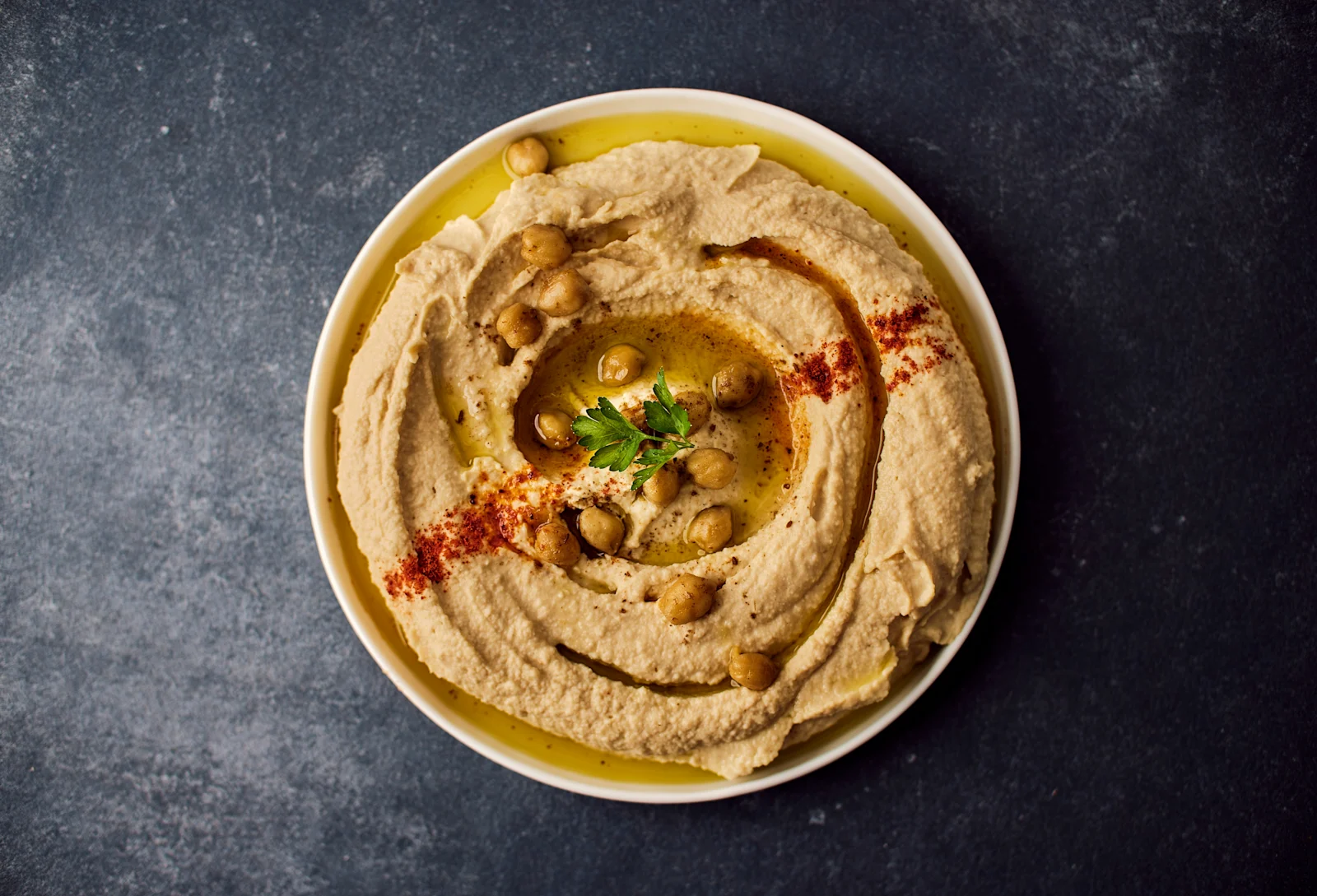
I was invited to a dinner where I was asked to bring plates, chairs and water. At gatherings like this — in defiance of any connection with local habits and customs — there is usually a buffet to which everyone has contributed something. That something corresponds more or less to what we Italians would call a side dish, and there is never a main course. Salad of this and salad of that, savoury pie, hummus, carrots, cucumbers and more hummus. Mint water in the dispenser; beneath it, the glass — which you brought yourself — and everyone sitting on the ground.
Only a few days earlier, I had received another dinner invitation where there was a main course: farmed sea bream. “They’re good and they don’t have scales, but do they need gutting?”
I find little difference between the two experiences, except that the first group probably felt more socialist than the second. Although Sardinia is one of the places that has managed to avoid the intensive farming invasion and retains a certain identity pride, more than 70 per cent of the population relies on supermarkets and large retail chains for its day-to-day shopping. Yet homologation transcends social boundaries. It does not need major groceries or fast-food chains in order to become visible.
Among other things, Pier Paolo Pasolini foresaw this too. In Against Long Hair (1973), he describes precisely how a symbol born as an anti-bourgeois protest becomes the language of television and advertising: alternative homologation, the homologation of those who believed themselves untouched by it. Contemporary homologation does not erase difference: it compels us all to be different in exactly the same way.
A few days ago, just as I was putting the finishing touches to this piece, I was reading the newspaper on a pier by the bay when a pair of cyclists caught my attention. She performed every gesture required to fulfil the image one would have expected of her, in flawless sequence: she arrives, takes off her shoes, undresses, bares her breasts; she dives into the sea as I have seen people do in documentaries about hippies in Northern Europe in the 1970s; she emerges from the water, climbs back up and embraces her boyfriend in his underpants — her life partner, who could not wait for because it was hot and she could feel on her skin the sweat of dozens of kilometres on the bike saddle, in the Sardinia where you can go on beautiful hikes, where there is a protected marine area with a sea cliffs for you to try climbing. I could not help wondering what they might have brought along if I had invited them to dinner, but I would bet it would not have been a Sardinian sausage.
For a long time, I thought that the act of sitting down at a table might offer refuge from this homologation, but unfortunately I noticed that it is not enough. The table, too, has undergone the inevitable colonisation of modes of operation that apparently display diversity yet prove identical to themselves; that fight one another yet shake hands; that exist only because the forces they claim to oppose exist. From fine dining to hippie potlucks where “everyone brings something”, the table has erased conflict, turning it into a communal “wow” (which analysis I shall leave for another article the table’s wows, whose different intonations differentiate diners’ social backgrounds, author’s note). A social peace holding together until the main courses have been eaten. If any superstructure does manage to collapse, it does so only after the food arrives.
That Sobremesa — what we Italians might call lo svacco, the post-prandial sprawl — eased by the processes of digestion. A situational sobremesa that still leaves a little room for the unexpected. A moment of de-homologation in which there is still space for exchange and conflict, perhaps slightly altered by food and drink, setting worlds against worlds and lending things an existential legitimacy. A moment encountered very rarely in the Tourismocene. This strikes me as the only truly necessary neologism to end in -cene today: the age of tourism, which is another way of saying the age of homologation and of the separation of humanity from nature.
It is no longer enough to sit down at a table in the hope of creating such a moment. It seems more important to linger there. To linger in that time, in that suspended, sated, reflective and anarchic space — the unquestionably dramatic post-coital interval of communal nourishment. That gesture without a gesture: the human being overwhelmed by itself, by the more or less greedy necessity of eating — alone, paired, in a group; for work, for form’s sake, as a family.
We sit down at the table, sometimes because we have no choice. But what does it mean to linger? What does it mean to remain there even after the table has exhausted its functional purpose? The sobremesa does not function. It lingers. It remains one of the few non-technical, useless, redundant, dysfunctional spaces.
To linger is human.
Published October 1, 2026
Author: Claudio Morelli Co-founder, reversocollettivo
Credit image: Ludovic Avice / Unsplash
In Sardinia, I was invited to Mamatita, a performing arts festival that has been populating Alghero every summer for some years now. My friend who works there made sure to inform me that there was “a guy who makes excellent kombucha”. Kombucha is a lightly sparkling fermented Asian drink which, for some strange reason, has been quenching the thirst of the radical left and the creative class of our time for the past few years.
Alghero, meanwhile, is a Catalan-founded stronghold by the sea which long preserved a language closer to the one spoken in Barcelona than to that of the rest of Sardinia. Along the seafront, beyond the walls, where ancient cannons and catapults give way to an open view of the road to Bosa, a sandwich small enough to fit in the palm of your hand starts at €12. In the old town, a single block can feature as many as four ice-cream and numerous souvenir shops, seasonal “traditional” restaurants and some commercial spaces given over to self-service machines selling drinks and packaged food.
In 2025, Alghero recorded more than 1.8 million tourist nights, in a small city of 40,000 inhabitants. On a separate note, groups of citizens, most of them elderly, put together informal actions with almost no money, defending the area’s old traditions, often in its historic local language. Institutions lend their patronage here and there, though on different scales. The city’s administration has decided to invest €900,000 over the next three years in a sporting event called Ironman, a competition born — ça va sans dire — in the United States, where entry costs an athlete €500, the route is coated with the logos of fashionable shoe brands, and the start unfolds to the sound of a contemporary quasi-tribal chant whipping the athletes into charging headlong into the water.
By the sidelines of the event, I spot a group of wellness fanatics who have decided — finally, for God’s sake — to monetise the rhetoric of Sardinia as a “blue island”, a place where people live beautifully to an advanced age. Yes, it is — or rather, was — one of the regions with the highest life expectancy in the world, and it boasts an extraordinary number of centenarians. Come live the longevity experience: fly Ryanair, come to Sardinia, exercise, eat, pay us the bill and you will live forever. A re-enactment of poverty without poverty: the poverty that forced people into hard labour in the fields, to eat what the land could produce — food that really was healthy, because it couldn’t be else — to favour legumes over meat, and to live by nature’s clock. After “slow-life” tourism — a phenomenon born in Italy with Instagram accounts spying on lunches and beach naps — comes long-life tourism.
I was invited to a dinner where I was asked to bring plates, chairs and water. At gatherings like this — in defiance of any connection with local habits and customs — there is usually a buffet to which everyone has contributed something. That something corresponds more or less to what we Italians would call a side dish, and there is never a main course. Salad of this and salad of that, savoury pie, hummus, carrots, cucumbers and more hummus. Mint water in the dispenser; beneath it, the glass — which you brought yourself — and everyone sitting on the ground.
Only a few days earlier, I had received another dinner invitation where there was a main course: farmed sea bream. “They’re good and they don’t have scales, but do they need gutting?”
I find little difference between the two experiences, except that the first group probably felt more socialist than the second. Although Sardinia is one of the places that has managed to avoid the intensive farming invasion and retains a certain identity pride, more than 70 per cent of the population relies on supermarkets and large retail chains for its day-to-day shopping. Yet homologation transcends social boundaries. It does not need major groceries or fast-food chains in order to become visible.
Among other things, Pier Paolo Pasolini foresaw this too. In Against Long Hair (1973), he describes precisely how a symbol born as an anti-bourgeois protest becomes the language of television and advertising: alternative homologation, the homologation of those who believed themselves untouched by it. Contemporary homologation does not erase difference: it compels us all to be different in exactly the same way.
A few days ago, just as I was putting the finishing touches to this piece, I was reading the newspaper on a pier by the bay when a pair of cyclists caught my attention. She performed every gesture required to fulfil the image one would have expected of her, in flawless sequence: she arrives, takes off her shoes, undresses, bares her breasts; she dives into the sea as I have seen people do in documentaries about hippies in Northern Europe in the 1970s; she emerges from the water, climbs back up and embraces her boyfriend in his underpants — her life partner, who could not wait for because it was hot and she could feel on her skin the sweat of dozens of kilometres on the bike saddle, in the Sardinia where you can go on beautiful hikes, where there is a protected marine area with a sea cliffs for you to try climbing. I could not help wondering what they might have brought along if I had invited them to dinner, but I would bet it would not have been a Sardinian sausage.
For a long time, I thought that the act of sitting down at a table might offer refuge from this homologation, but unfortunately I noticed that it is not enough. The table, too, has undergone the inevitable colonisation of modes of operation that apparently display diversity yet prove identical to themselves; that fight one another yet shake hands; that exist only because the forces they claim to oppose exist. From fine dining to hippie potlucks where “everyone brings something”, the table has erased conflict, turning it into a communal “wow” (which analysis I shall leave for another article the table’s wows, whose different intonations differentiate diners’ social backgrounds, author’s note). A social peace holding together until the main courses have been eaten. If any superstructure does manage to collapse, it does so only after the food arrives.
That Sobremesa — what we Italians might call lo svacco, the post-prandial sprawl — eased by the processes of digestion. A situational sobremesa that still leaves a little room for the unexpected. A moment of de-homologation in which there is still space for exchange and conflict, perhaps slightly altered by food and drink, setting worlds against worlds and lending things an existential legitimacy. A moment encountered very rarely in the Tourismocene. This strikes me as the only truly necessary neologism to end in -cene today: the age of tourism, which is another way of saying the age of homologation and of the separation of humanity from nature.
It is no longer enough to sit down at a table in the hope of creating such a moment. It seems more important to linger there. To linger in that time, in that suspended, sated, reflective and anarchic space — the unquestionably dramatic post-coital interval of communal nourishment. That gesture without a gesture: the human being overwhelmed by itself, by the more or less greedy necessity of eating — alone, paired, in a group; for work, for form’s sake, as a family.
We sit down at the table, sometimes because we have no choice. But what does it mean to linger? What does it mean to remain there even after the table has exhausted its functional purpose? The sobremesa does not function. It lingers. It remains one of the few non-technical, useless, redundant, dysfunctional spaces.
To linger is human.