• Happenings
  • Living Archive
  • Where
  • About
  • Support us

Introducing upcoming Sobremesa Residents

Introducing upcoming Sobremesa Residents

Introducing upcoming Sobremesa Residents

Ongoing

September 30, 2026 – December 20, 2026

Ongoing

September 30, 2026 – December 20, 2026

spain
Greece
Portugal
Fix in Art
Echoes Residency
Food Hack Lab
Hangar
Lisbon Art Weekend
sobremesa
residency
onsite
spain
Greece
Portugal
Fix in Art
Echoes Residency
Food Hack Lab
Hangar
Lisbon Art Weekend
sobremesa
residency
onsite

Sobremesa’s residencies unfold across three distinct yet interconnected contexts in Greece, Portugal, and the Basque region of Spain. Bringing together local realities and shared research questions, the programme approaches food as both material and method: a way of producing knowledge through cooking, making, documenting, coding, and gathering.

Each residency offers a space for creative and critical research, responding to specific contexts while contributing to a broader inquiry into food cultures, migration, care, technology, and social organisation. From postcolonial archives and diasporic food cultures in Lisbon to open culture and technological experimentation in San Sebastián, and care and solidarity infrastructures in Thessaloniki, residents are invited to engage with situated forms of knowledge and practice.

Across these parallel environments, Sobremesa fosters exchange, collaboration, and collective reflection, connecting local research to wider questions of culture, politics, social relations, and transnationalism in 21st-century Europe.

Echoes residency

Thessaloniki, Greece

Henry Alles  artist 

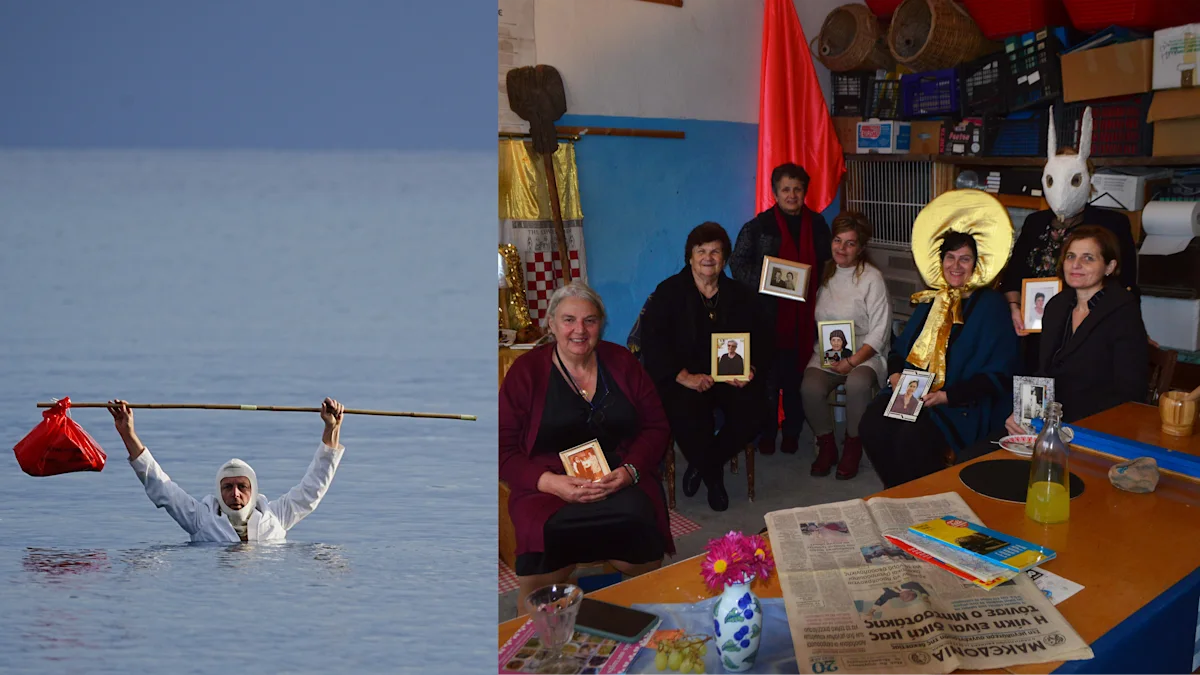
Henry Alles is a Dutch  socially-engaged artist, who works with Landscape Labs, a platform that looks at landscapes as places defined by emotion, migration, changes and above all people. He artistically leads the Foundation Proef me (Taste me) and works collectively with several artist groups. The key to his work is Change & Place, mixing cultural and culinary heritage with art and theatre on site. With a background in Environmental Science and Theatre Practices, his work is strongly influenced by transformative communities. Over the past few years, he has worked on art projects, remembering and searching for lost recipes, working in the kitchens of women-led collectives, cooking centuries-old recipes, and rediscovering customs. Not to eat, but to bring people together. His goal is to collectively share events in such a way that everybody feels welcomed, treating every place as a home, an excavation and a theatre.

For Sobremesa, Henry asks “What if a recipe is not an instruction for cooking, but a score for living together?”. Taking Europe as a shared cultural kitchen, The Recipe As Carrier Bag will become a study of migration, loss, and collective memory. Henry will continue his work excavating herstories, non-heroic, everyday acts and stories of waiting, caring, sharing, remembering, receiving, and making space. 
echoes HenryAlles ProfileImage
Image credits: Verena Lernpreis, Henry Alles

Angela Bonan designer, practitioner

Angela Bonan is an Italian designer and practitioner specialised in eco-social design and multimedia technologies. Her work combines design, creativity, and the prototyping of graphic, multimedia, or tangible artefacts, with a participatory, bottom-up approach. Her current research explores social economies, the commons, and peer-to-peer practices. Her recent research grew out of work within the food aid system in Bolzano, Italy, where she identified issues of nutrition, passivity, isolation, and loss of dignity built into charity-based models. In response, she began co-devising "Cookbook: Recipes and Practices for Many Hands," documenting prototypes and tools that transform kitchens and tables into spaces for discussion, governance, and collaboration. For Sobremesa, Angela looks into collectively organised cooking and collective improvisation, and whether it can function as a deliberate counter-practice to bordering–building identity with others rather than against them.
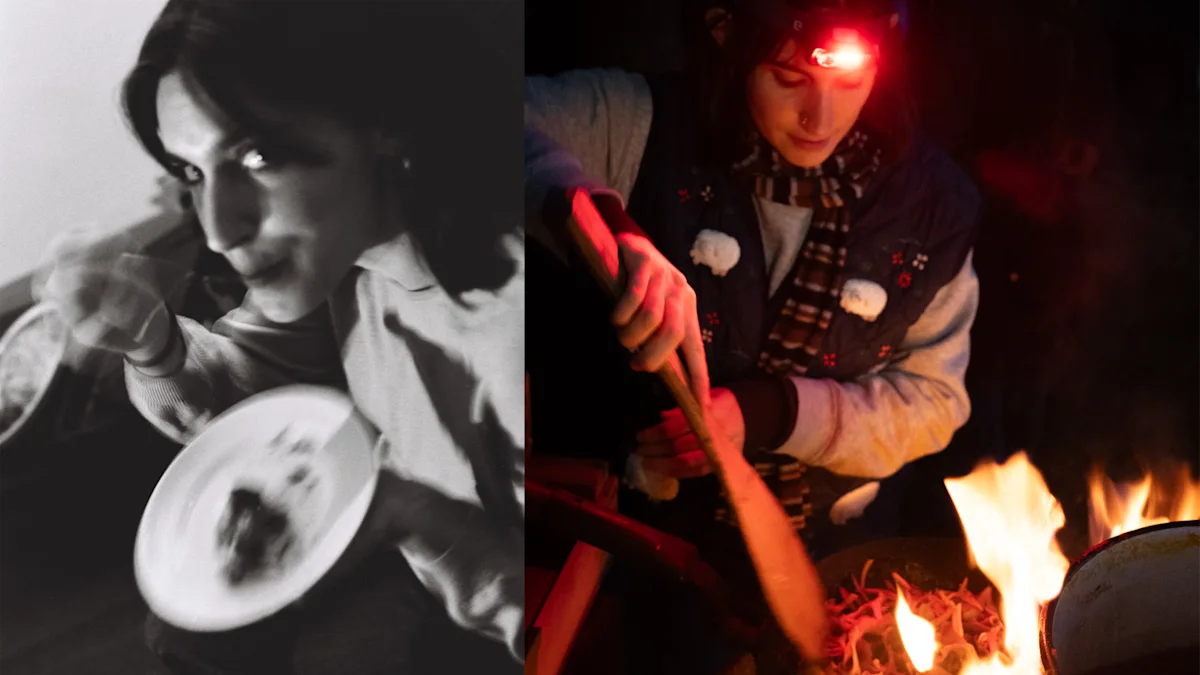
For Sobremesa, working alongside Fix in Art in Epanomi, Angela carries the question of “authentic food identities” into a new kitchen and a new table, looking into the potential of collectively organised cooking and collective improvisation, and whether it can function as a deliberate counter-practice to bordering–building identity with others rather than against them.

echoes AngelaBonan practice
Image credits: Laïsa Cordes, Simon Wallis

Rosa Apablaza artist, art educator, cook

This residency has been made possible thanks to an additional supporting grant financed by Trans Europe Halles.

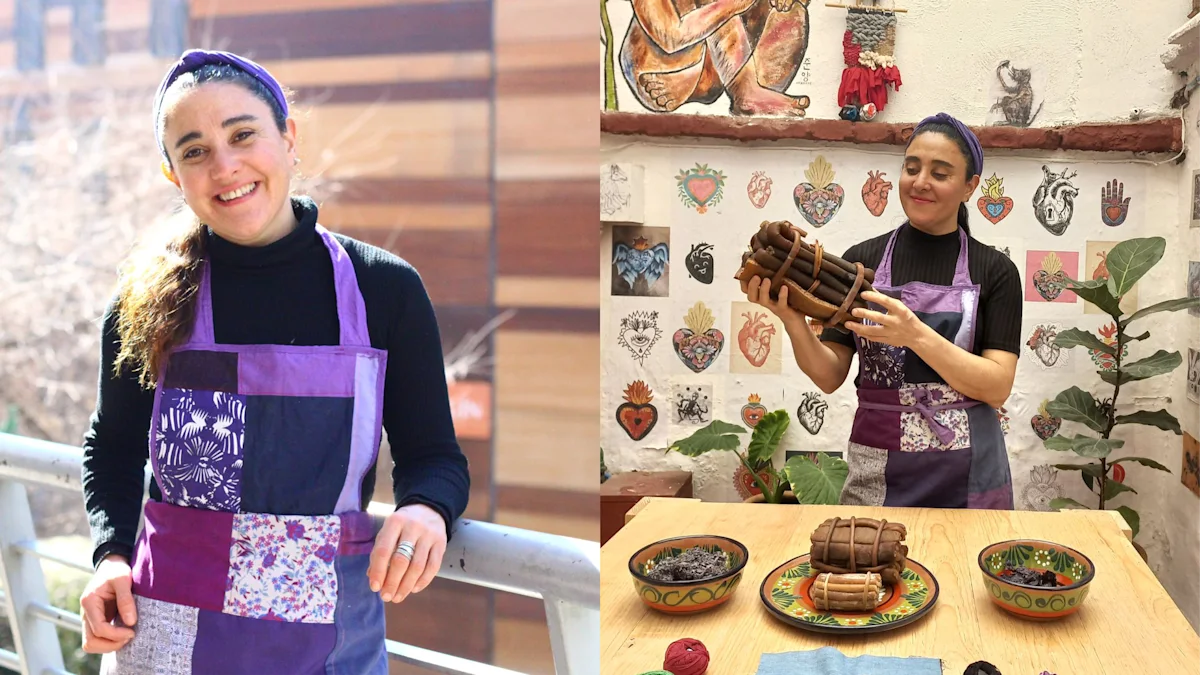
Rosa Apablaza is a Chilean artist, art educator, and cook with extensive experience in community-based and socially-engaged work. Her practice in artistic creation and workshop facilitation moves through textile art, performance, public space interventions, video, and cooking, investigating issues such as collective processes, migration, ways to unlearn and decolonise, collaborative education, and commons.

Since co-founding it in 2024, Rosa has been part of "La Cocina de Violeta," a community-based art and culinary project that conducts cultural mediation activities through food at the Violeta Parra Museum in Santiago, Chile. Much more than preparing food and eating together, a community kitchen carries a collective identity, a conceptual and political backdrop, an infrastructure of care and maintenance, that sustains the project, nurtures the organisation, and carries out its activities. Rosa uses functional kitchen textile art to support the collective and its identity.

For Sobremesa, her project "Kitchen Textiles" expands her research on the collective identities of community kitchens, using upcycling workshops and community-driven initiatives to create functional textiles for the Fix in Art kitchen that carry its identity and political backdrop.
echoes RosaApablaza ProfileImage
Image credits: Mónica Andrade, Cristian Dziekonski

HANGAR / Lisbon Art Weekend

Lisbon, Portugal

Groundtable

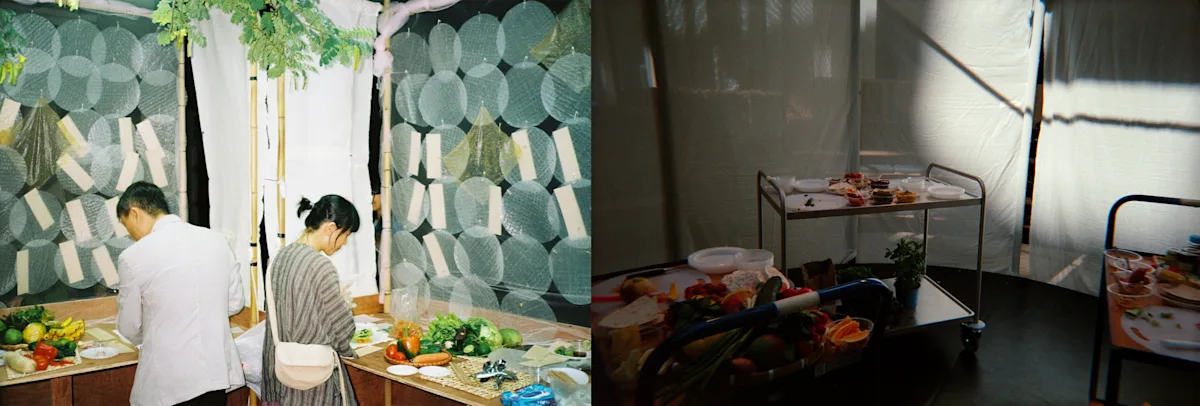
Groundtable is the collaborative practice of Kitman Pik Chee Yeung and Lalicha Lalitsasivimol, exploring the socio-anthropological dimensions of food, migration, and cultural identity. Working across spatial, graphic, and participatory formats, they create sensory encounters where food becomes both method and metaphor, investigating how culinary knowledge travels across borders, generations, and contexts. Through site-specific workshops, publications, and collaborative cookbooks, Groundtable works with local communities to exchange stories, document recipes, and explore adaptation and belonging.

Kitman Pik Chee Yeung is an interdisciplinary artist with a background in neuroscience, whose practice explores migration and identity through public interventions, participatory workshops, and curatorial projects bridging European and migrant contexts. Gift Lalicha Lalitsasivimol is an experimental maker with a background in interior architecture, combining research-based approaches, participatory methods, and spatial narratives through field observation, documentation, and material experimentation.

Over Sobremesa they’ll feature The Centrifugal Table, a practice-led research project  that uses the rotating dining table as a device for exploring migration, hierarchy, memory, and cultural exchange. Situated within Lisbon’s Asian diaspora, it examines how food and dining spaces can reveal histories of exclusion and colonial entanglement.

Using the journey of the pastel de nata and its transformation into the Macanese pou tat as a case study, the project traces how recipes travel, adapt, and become living archives of migration. Through rotating-table encounters, cooking, and conversation, it explores culinary creolization and the circulation of people, labour, knowledge, and memory across Portugal and Asia.
Hangar groundtable profileImage
Hangar

Jess Zamora-Turner artist and grower

Jess's practice can best be described as patchworking, making materials and histories belong together in ways they weren't meant to. Her emotional and spiritual remaking unfolds slowly, through her own hands or by allowing natural elements to colour, shape and leave their traces in the materials. As textiles, threads, leaves, flowers and seeds come together to form sculptures, they propose alternative landscapes that challenge political and environmental realities.

Jess frequently collaborates with poets, musicians, cooks, dancers, performers, and filmmakers to activate her works in collective events. Her practice expands on the tradition of Andean abstraction and experimental dyeing with plants that are foraged or specially grown. 

Her project for Sobremesa, Restorying European Maízscapes, explores maíz as a living archive of Indigenous knowledge, colonial histories, migration, and agricultural change. For seven years, the artist has grown Andean heirloom varieties on the Polish-German border, using seed stewardship and biodiversity as a way to reconnect with ancestral landscapes while adapting to new soils.

At Hangar, this research would move to Portugal, examining maíz's journey from an Indigenous American crop to a major European industrial and GMO crop. Through seed work, textiles, oral histories, archival research, and collective cooking, the project would investigate what maíz reveals about Portugal's colonial past and its ongoing agricultural and cultural legacies.

The project asks how seeds can carry, transform, and restore histories, and how these inheritances might inform more biodiverse and reciprocal agricultural futures.
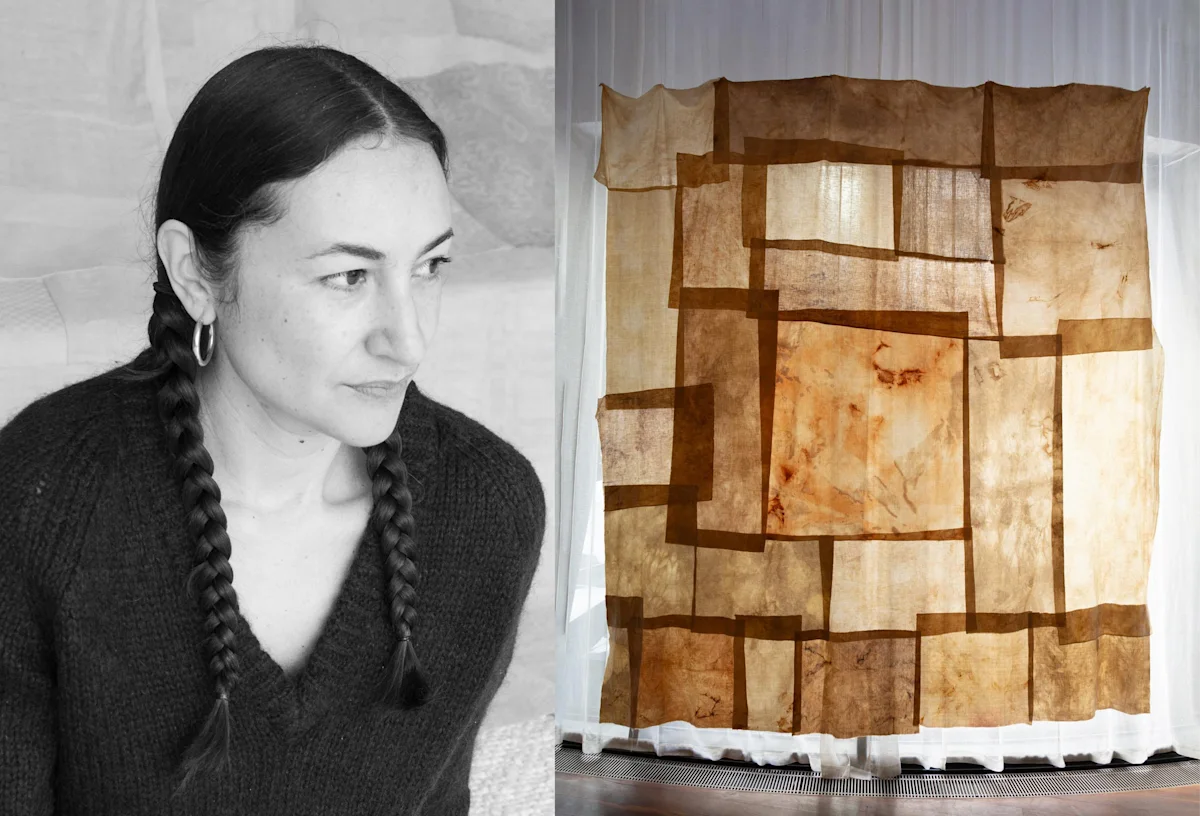
Hangar JessZamora ProfileImage
Jess Zamora-Turner

Food Hack Lab

Donostia, Basque Country (Spain)

Marie Kerkeling Pastry chef and culinary researcher

Marie Kerkeling is a French pastry chef and culinary researcher whose practice moves between kitchen, archive and field. Drawing on her French, Vietnamese Tày and German family histories, she explores how pastry can carry territory, memory, migration and transmission.

She trained at École Boulle and FERRANDI Paris and completed a Master’s in Gastronomy: World Food Cultures and Mobility at the University of Gastronomic Sciences in Pollenzo. Her work has developed through professional kitchens, artistic food residencies, field research, farming, beekeeping and seed-preservation initiatives.

She is the founder of Quảng Corner, a nomadic project dedicated to chè đá, and is developing IS LAND PASTRY, a living, open-source cartography of endangered pastry knowledge.
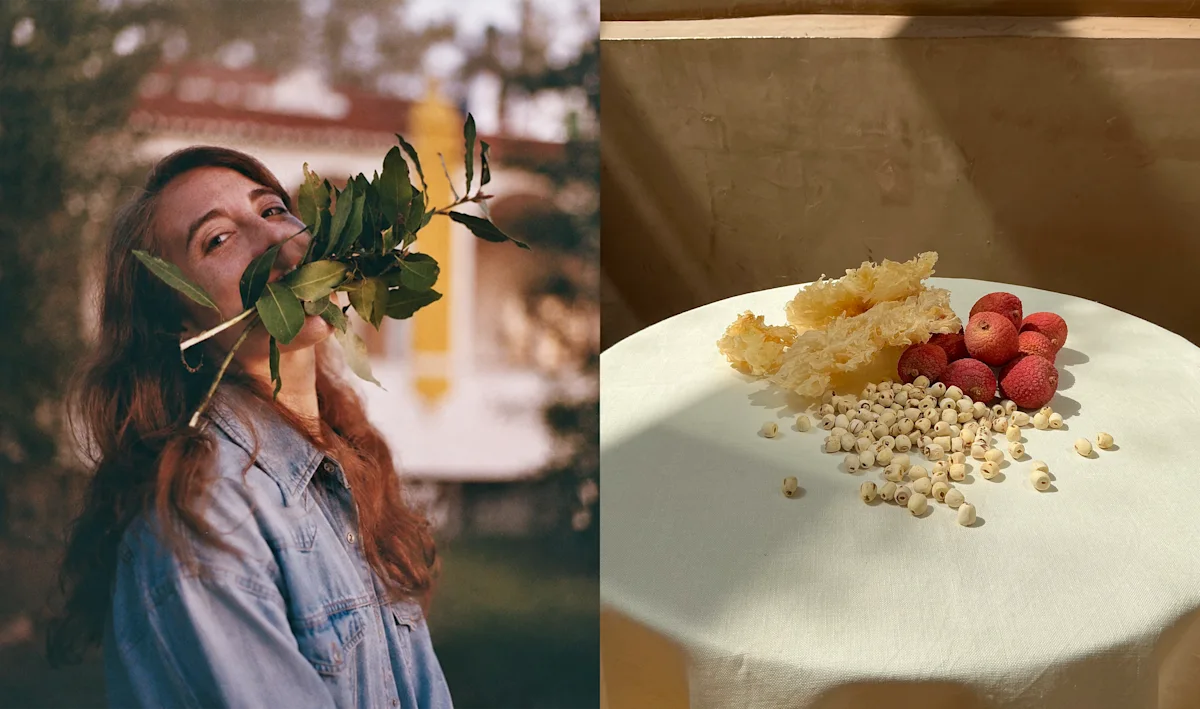
FHL Marie Kerkeling ProfileImage
Marie Kerkeling. Image credits: Lionel Bensemoun

Marco Falcone Chef and architect

Marco Falcone is an Italian chef and architect whose practice brings together food, architecture and anthropology. For nine years he has explored relationships between food and environment through culinary practice, fermentation, spatial design and collective rituals.

His experience ranges from Food and Beverage Management to concept development and the creation of convivial environments. Since 2019 he has developed Uccalamma, his culinary portfolio, and since 2022 he has curated Bosco Colto’s food project.

In his work, bread-making and wild fermentation become accessible ways of bringing people together. He approaches the table as a form of architecture: a space where bodies, materials, stories and places meet. 

His proposal for the residency, Opera Metabolica, takes the sobremesa as a point of departure to explore ecological rhythms, materials and food memories.
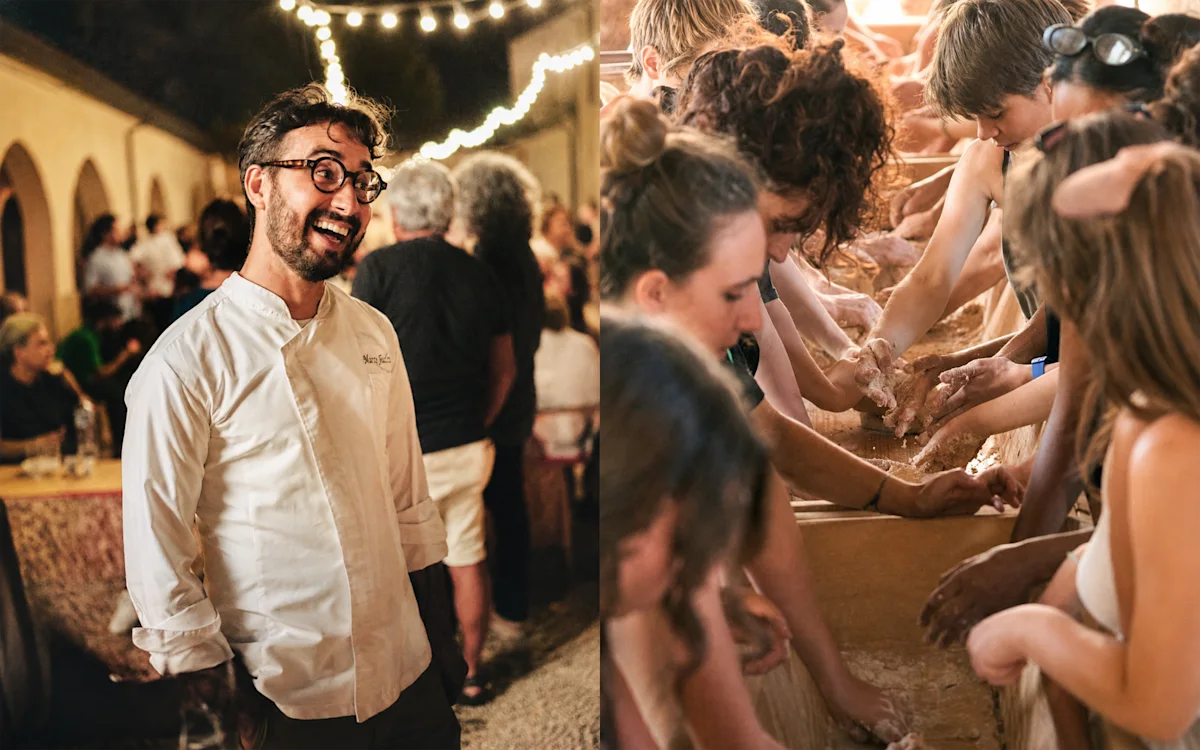
FHL Marco Falcone practice
Image credits: Giuliana Lo Presti

Sobremesa’s residencies unfold across three distinct yet interconnected contexts in Greece, Portugal, and the Basque region of Spain. Bringing together local realities and shared research questions, the programme approaches food as both material and method: a way of producing knowledge through cooking, making, documenting, coding, and gathering.

Each residency offers a space for creative and critical research, responding to specific contexts while contributing to a broader inquiry into food cultures, migration, care, technology, and social organisation. From postcolonial archives and diasporic food cultures in Lisbon to open culture and technological experimentation in San Sebastián, and care and solidarity infrastructures in Thessaloniki, residents are invited to engage with situated forms of knowledge and practice.

Across these parallel environments, Sobremesa fosters exchange, collaboration, and collective reflection, connecting local research to wider questions of culture, politics, social relations, and transnationalism in 21st-century Europe.

Echoes residency

Thessaloniki, Greece

Henry Alles  artist 

Henry Alles is a Dutch  socially-engaged artist, who works with Landscape Labs, a platform that looks at landscapes as places defined by emotion, migration, changes and above all people. He artistically leads the Foundation Proef me (Taste me) and works collectively with several artist groups. The key to his work is Change & Place, mixing cultural and culinary heritage with art and theatre on site. With a background in Environmental Science and Theatre Practices, his work is strongly influenced by transformative communities. Over the past few years, he has worked on art projects, remembering and searching for lost recipes, working in the kitchens of women-led collectives, cooking centuries-old recipes, and rediscovering customs. Not to eat, but to bring people together. His goal is to collectively share events in such a way that everybody feels welcomed, treating every place as a home, an excavation and a theatre.

For Sobremesa, Henry asks “What if a recipe is not an instruction for cooking, but a score for living together?”. Taking Europe as a shared cultural kitchen, The Recipe As Carrier Bag will become a study of migration, loss, and collective memory. Henry will continue his work excavating herstories, non-heroic, everyday acts and stories of waiting, caring, sharing, remembering, receiving, and making space. 

echoes HenryAlles ProfileImage
Image credits: Verena Lernpreis, Henry Alles

Angela Bonan designer, practitioner

Angela Bonan is an Italian designer and practitioner specialised in eco-social design and multimedia technologies. Her work combines design, creativity, and the prototyping of graphic, multimedia, or tangible artefacts, with a participatory, bottom-up approach. Her current research explores social economies, the commons, and peer-to-peer practices. Her recent research grew out of work within the food aid system in Bolzano, Italy, where she identified issues of nutrition, passivity, isolation, and loss of dignity built into charity-based models. In response, she began co-devising "Cookbook: Recipes and Practices for Many Hands," documenting prototypes and tools that transform kitchens and tables into spaces for discussion, governance, and collaboration. For Sobremesa, Angela looks into collectively organised cooking and collective improvisation, and whether it can function as a deliberate counter-practice to bordering–building identity with others rather than against them.

For Sobremesa, working alongside Fix in Art in Epanomi, Angela carries the question of “authentic food identities” into a new kitchen and a new table, looking into the potential of collectively organised cooking and collective improvisation, and whether it can function as a deliberate counter-practice to bordering–building identity with others rather than against them.

echoes AngelaBonan practice
Image credits: Laïsa Cordes, Simon Wallis

Rosa Apablaza artist, art educator, cook

This residency has been made possible thanks to an additional supporting grant financed by Trans Europe Halles.

Rosa Apablaza is a Chilean artist, art educator, and cook with extensive experience in community-based and socially-engaged work. Her practice in artistic creation and workshop facilitation moves through textile art, performance, public space interventions, video, and cooking, investigating issues such as collective processes, migration, ways to unlearn and decolonise, collaborative education, and commons.

Since co-founding it in 2024, Rosa has been part of "La Cocina de Violeta," a community-based art and culinary project that conducts cultural mediation activities through food at the Violeta Parra Museum in Santiago, Chile. Much more than preparing food and eating together, a community kitchen carries a collective identity, a conceptual and political backdrop, an infrastructure of care and maintenance, that sustains the project, nurtures the organisation, and carries out its activities. Rosa uses functional kitchen textile art to support the collective and its identity.

For Sobremesa, her project "Kitchen Textiles" expands her research on the collective identities of community kitchens, using upcycling workshops and community-driven initiatives to create functional textiles for the Fix in Art kitchen that carry its identity and political backdrop.

echoes RosaApablaza ProfileImage
Image credits: Mónica Andrade, Cristian Dziekonski

HANGAR / Lisbon Art Weekend

Lisbon, Portugal

Groundtable

Groundtable is the collaborative practice of Kitman Pik Chee Yeung and Lalicha Lalitsasivimol, exploring the socio-anthropological dimensions of food, migration, and cultural identity. Working across spatial, graphic, and participatory formats, they create sensory encounters where food becomes both method and metaphor, investigating how culinary knowledge travels across borders, generations, and contexts. Through site-specific workshops, publications, and collaborative cookbooks, Groundtable works with local communities to exchange stories, document recipes, and explore adaptation and belonging.

Kitman Pik Chee Yeung is an interdisciplinary artist with a background in neuroscience, whose practice explores migration and identity through public interventions, participatory workshops, and curatorial projects bridging European and migrant contexts. Gift Lalicha Lalitsasivimol is an experimental maker with a background in interior architecture, combining research-based approaches, participatory methods, and spatial narratives through field observation, documentation, and material experimentation.

Over Sobremesa they’ll feature The Centrifugal Table, a practice-led research project  that uses the rotating dining table as a device for exploring migration, hierarchy, memory, and cultural exchange. Situated within Lisbon’s Asian diaspora, it examines how food and dining spaces can reveal histories of exclusion and colonial entanglement.

Using the journey of the pastel de nata and its transformation into the Macanese pou tat as a case study, the project traces how recipes travel, adapt, and become living archives of migration. Through rotating-table encounters, cooking, and conversation, it explores culinary creolization and the circulation of people, labour, knowledge, and memory across Portugal and Asia.

Hangar groundtable profileImage
Hangar

Jess Zamora-Turner artist and grower

Jess's practice can best be described as patchworking, making materials and histories belong together in ways they weren't meant to. Her emotional and spiritual remaking unfolds slowly, through her own hands or by allowing natural elements to colour, shape and leave their traces in the materials. As textiles, threads, leaves, flowers and seeds come together to form sculptures, they propose alternative landscapes that challenge political and environmental realities.

Jess frequently collaborates with poets, musicians, cooks, dancers, performers, and filmmakers to activate her works in collective events. Her practice expands on the tradition of Andean abstraction and experimental dyeing with plants that are foraged or specially grown. 

Her project for Sobremesa, Restorying European Maízscapes, explores maíz as a living archive of Indigenous knowledge, colonial histories, migration, and agricultural change. For seven years, the artist has grown Andean heirloom varieties on the Polish-German border, using seed stewardship and biodiversity as a way to reconnect with ancestral landscapes while adapting to new soils.

At Hangar, this research would move to Portugal, examining maíz's journey from an Indigenous American crop to a major European industrial and GMO crop. Through seed work, textiles, oral histories, archival research, and collective cooking, the project would investigate what maíz reveals about Portugal's colonial past and its ongoing agricultural and cultural legacies.

The project asks how seeds can carry, transform, and restore histories, and how these inheritances might inform more biodiverse and reciprocal agricultural futures.

Hangar JessZamora ProfileImage
Jess Zamora-Turner

Food Hack Lab

Donostia, Basque Country (Spain)

Marie Kerkeling Pastry chef and culinary researcher

Marie Kerkeling is a French pastry chef and culinary researcher whose practice moves between kitchen, archive and field. Drawing on her French, Vietnamese Tày and German family histories, she explores how pastry can carry territory, memory, migration and transmission.

She trained at École Boulle and FERRANDI Paris and completed a Master’s in Gastronomy: World Food Cultures and Mobility at the University of Gastronomic Sciences in Pollenzo. Her work has developed through professional kitchens, artistic food residencies, field research, farming, beekeeping and seed-preservation initiatives.

She is the founder of Quảng Corner, a nomadic project dedicated to chè đá, and is developing IS LAND PASTRY, a living, open-source cartography of endangered pastry knowledge.

FHL Marie Kerkeling ProfileImage
Marie Kerkeling. Image credits: Lionel Bensemoun

Marco Falcone Chef and architect

Marco Falcone is an Italian chef and architect whose practice brings together food, architecture and anthropology. For nine years he has explored relationships between food and environment through culinary practice, fermentation, spatial design and collective rituals.

His experience ranges from Food and Beverage Management to concept development and the creation of convivial environments. Since 2019 he has developed Uccalamma, his culinary portfolio, and since 2022 he has curated Bosco Colto’s food project.

In his work, bread-making and wild fermentation become accessible ways of bringing people together. He approaches the table as a form of architecture: a space where bodies, materials, stories and places meet. 

His proposal for the residency, Opera Metabolica, takes the sobremesa as a point of departure to explore ecological rhythms, materials and food memories.

FHL Marco Falcone practice
Image credits: Giuliana Lo Presti

Ongoing

September 30, 2026 – December 20, 2026

Ongoing

September 30, 2026 – December 20, 2026

spain
Greece
Portugal
Fix in Art
Echoes Residency
Food Hack Lab
Hangar
Lisbon Art Weekend
sobremesa
residency
onsite
spain
Greece
Portugal
Fix in Art
Echoes Residency
Food Hack Lab
Hangar
Lisbon Art Weekend
sobremesa
residency
onsite

Sobremesa’s residencies unfold across three distinct yet interconnected contexts in Greece, Portugal, and the Basque region of Spain. Bringing together local realities and shared research questions, the programme approaches food as both material and method: a way of producing knowledge through cooking, making, documenting, coding, and gathering.

Each residency offers a space for creative and critical research, responding to specific contexts while contributing to a broader inquiry into food cultures, migration, care, technology, and social organisation. From postcolonial archives and diasporic food cultures in Lisbon to open culture and technological experimentation in San Sebastián, and care and solidarity infrastructures in Thessaloniki, residents are invited to engage with situated forms of knowledge and practice.

Across these parallel environments, Sobremesa fosters exchange, collaboration, and collective reflection, connecting local research to wider questions of culture, politics, social relations, and transnationalism in 21st-century Europe.

Echoes residency

Thessaloniki, Greece

Henry Alles  artist 

Henry Alles is a Dutch  socially-engaged artist, who works with Landscape Labs, a platform that looks at landscapes as places defined by emotion, migration, changes and above all people. He artistically leads the Foundation Proef me (Taste me) and works collectively with several artist groups. The key to his work is Change & Place, mixing cultural and culinary heritage with art and theatre on site. With a background in Environmental Science and Theatre Practices, his work is strongly influenced by transformative communities. Over the past few years, he has worked on art projects, remembering and searching for lost recipes, working in the kitchens of women-led collectives, cooking centuries-old recipes, and rediscovering customs. Not to eat, but to bring people together. His goal is to collectively share events in such a way that everybody feels welcomed, treating every place as a home, an excavation and a theatre.

For Sobremesa, Henry asks “What if a recipe is not an instruction for cooking, but a score for living together?”. Taking Europe as a shared cultural kitchen, The Recipe As Carrier Bag will become a study of migration, loss, and collective memory. Henry will continue his work excavating herstories, non-heroic, everyday acts and stories of waiting, caring, sharing, remembering, receiving, and making space. 

echoes HenryAlles ProfileImage
Image credits: Verena Lernpreis, Henry Alles

Angela Bonan designer, practitioner

Angela Bonan is an Italian designer and practitioner specialised in eco-social design and multimedia technologies. Her work combines design, creativity, and the prototyping of graphic, multimedia, or tangible artefacts, with a participatory, bottom-up approach. Her current research explores social economies, the commons, and peer-to-peer practices. Her recent research grew out of work within the food aid system in Bolzano, Italy, where she identified issues of nutrition, passivity, isolation, and loss of dignity built into charity-based models. In response, she began co-devising "Cookbook: Recipes and Practices for Many Hands," documenting prototypes and tools that transform kitchens and tables into spaces for discussion, governance, and collaboration. For Sobremesa, Angela looks into collectively organised cooking and collective improvisation, and whether it can function as a deliberate counter-practice to bordering–building identity with others rather than against them.

For Sobremesa, working alongside Fix in Art in Epanomi, Angela carries the question of “authentic food identities” into a new kitchen and a new table, looking into the potential of collectively organised cooking and collective improvisation, and whether it can function as a deliberate counter-practice to bordering–building identity with others rather than against them.

echoes AngelaBonan practice
Image credits: Laïsa Cordes, Simon Wallis

Rosa Apablaza artist, art educator, cook

This residency has been made possible thanks to an additional supporting grant financed by Trans Europe Halles.

Rosa Apablaza is a Chilean artist, art educator, and cook with extensive experience in community-based and socially-engaged work. Her practice in artistic creation and workshop facilitation moves through textile art, performance, public space interventions, video, and cooking, investigating issues such as collective processes, migration, ways to unlearn and decolonise, collaborative education, and commons.

Since co-founding it in 2024, Rosa has been part of "La Cocina de Violeta," a community-based art and culinary project that conducts cultural mediation activities through food at the Violeta Parra Museum in Santiago, Chile. Much more than preparing food and eating together, a community kitchen carries a collective identity, a conceptual and political backdrop, an infrastructure of care and maintenance, that sustains the project, nurtures the organisation, and carries out its activities. Rosa uses functional kitchen textile art to support the collective and its identity.

For Sobremesa, her project "Kitchen Textiles" expands her research on the collective identities of community kitchens, using upcycling workshops and community-driven initiatives to create functional textiles for the Fix in Art kitchen that carry its identity and political backdrop.

echoes RosaApablaza ProfileImage
Image credits: Mónica Andrade, Cristian Dziekonski

HANGAR / Lisbon Art Weekend

Lisbon, Portugal

Groundtable

Groundtable is the collaborative practice of Kitman Pik Chee Yeung and Lalicha Lalitsasivimol, exploring the socio-anthropological dimensions of food, migration, and cultural identity. Working across spatial, graphic, and participatory formats, they create sensory encounters where food becomes both method and metaphor, investigating how culinary knowledge travels across borders, generations, and contexts. Through site-specific workshops, publications, and collaborative cookbooks, Groundtable works with local communities to exchange stories, document recipes, and explore adaptation and belonging.

Kitman Pik Chee Yeung is an interdisciplinary artist with a background in neuroscience, whose practice explores migration and identity through public interventions, participatory workshops, and curatorial projects bridging European and migrant contexts. Gift Lalicha Lalitsasivimol is an experimental maker with a background in interior architecture, combining research-based approaches, participatory methods, and spatial narratives through field observation, documentation, and material experimentation.

Over Sobremesa they’ll feature The Centrifugal Table, a practice-led research project  that uses the rotating dining table as a device for exploring migration, hierarchy, memory, and cultural exchange. Situated within Lisbon’s Asian diaspora, it examines how food and dining spaces can reveal histories of exclusion and colonial entanglement.

Using the journey of the pastel de nata and its transformation into the Macanese pou tat as a case study, the project traces how recipes travel, adapt, and become living archives of migration. Through rotating-table encounters, cooking, and conversation, it explores culinary creolization and the circulation of people, labour, knowledge, and memory across Portugal and Asia.

Hangar groundtable profileImage
Hangar

Jess Zamora-Turner artist and grower

Jess's practice can best be described as patchworking, making materials and histories belong together in ways they weren't meant to. Her emotional and spiritual remaking unfolds slowly, through her own hands or by allowing natural elements to colour, shape and leave their traces in the materials. As textiles, threads, leaves, flowers and seeds come together to form sculptures, they propose alternative landscapes that challenge political and environmental realities.

Jess frequently collaborates with poets, musicians, cooks, dancers, performers, and filmmakers to activate her works in collective events. Her practice expands on the tradition of Andean abstraction and experimental dyeing with plants that are foraged or specially grown. 

Her project for Sobremesa, Restorying European Maízscapes, explores maíz as a living archive of Indigenous knowledge, colonial histories, migration, and agricultural change. For seven years, the artist has grown Andean heirloom varieties on the Polish-German border, using seed stewardship and biodiversity as a way to reconnect with ancestral landscapes while adapting to new soils.

At Hangar, this research would move to Portugal, examining maíz's journey from an Indigenous American crop to a major European industrial and GMO crop. Through seed work, textiles, oral histories, archival research, and collective cooking, the project would investigate what maíz reveals about Portugal's colonial past and its ongoing agricultural and cultural legacies.

The project asks how seeds can carry, transform, and restore histories, and how these inheritances might inform more biodiverse and reciprocal agricultural futures.

Hangar JessZamora ProfileImage
Jess Zamora-Turner

Food Hack Lab

Donostia, Basque Country (Spain)

Marie Kerkeling Pastry chef and culinary researcher

Marie Kerkeling is a French pastry chef and culinary researcher whose practice moves between kitchen, archive and field. Drawing on her French, Vietnamese Tày and German family histories, she explores how pastry can carry territory, memory, migration and transmission.

She trained at École Boulle and FERRANDI Paris and completed a Master’s in Gastronomy: World Food Cultures and Mobility at the University of Gastronomic Sciences in Pollenzo. Her work has developed through professional kitchens, artistic food residencies, field research, farming, beekeeping and seed-preservation initiatives.

She is the founder of Quảng Corner, a nomadic project dedicated to chè đá, and is developing IS LAND PASTRY, a living, open-source cartography of endangered pastry knowledge.

FHL Marie Kerkeling ProfileImage
Marie Kerkeling. Image credits: Lionel Bensemoun

Marco Falcone Chef and architect

Marco Falcone is an Italian chef and architect whose practice brings together food, architecture and anthropology. For nine years he has explored relationships between food and environment through culinary practice, fermentation, spatial design and collective rituals.

His experience ranges from Food and Beverage Management to concept development and the creation of convivial environments. Since 2019 he has developed Uccalamma, his culinary portfolio, and since 2022 he has curated Bosco Colto’s food project.

In his work, bread-making and wild fermentation become accessible ways of bringing people together. He approaches the table as a form of architecture: a space where bodies, materials, stories and places meet. 

His proposal for the residency, Opera Metabolica, takes the sobremesa as a point of departure to explore ecological rhythms, materials and food memories.

FHL Marco Falcone practice
Image credits: Giuliana Lo Presti

Ongoing

September 30, 2026 – December 20, 2026

Ongoing

September 30, 2026 – December 20, 2026

spain
Greece
Portugal
Fix in Art
Echoes Residency
Food Hack Lab
Hangar
Lisbon Art Weekend
sobremesa
residency
onsite
spain
Greece
Portugal
Fix in Art
Echoes Residency
Food Hack Lab
Hangar
Lisbon Art Weekend
sobremesa
residency
onsite

Sobremesa’s residencies unfold across three distinct yet interconnected contexts in Greece, Portugal, and the Basque region of Spain. Bringing together local realities and shared research questions, the programme approaches food as both material and method: a way of producing knowledge through cooking, making, documenting, coding, and gathering.

Each residency offers a space for creative and critical research, responding to specific contexts while contributing to a broader inquiry into food cultures, migration, care, technology, and social organisation. From postcolonial archives and diasporic food cultures in Lisbon to open culture and technological experimentation in San Sebastián, and care and solidarity infrastructures in Thessaloniki, residents are invited to engage with situated forms of knowledge and practice.

Across these parallel environments, Sobremesa fosters exchange, collaboration, and collective reflection, connecting local research to wider questions of culture, politics, social relations, and transnationalism in 21st-century Europe.

Echoes residency

Thessaloniki, Greece

Henry Alles  artist 

Henry Alles is a Dutch  socially-engaged artist, who works with Landscape Labs, a platform that looks at landscapes as places defined by emotion, migration, changes and above all people. He artistically leads the Foundation Proef me (Taste me) and works collectively with several artist groups. The key to his work is Change & Place, mixing cultural and culinary heritage with art and theatre on site. With a background in Environmental Science and Theatre Practices, his work is strongly influenced by transformative communities. Over the past few years, he has worked on art projects, remembering and searching for lost recipes, working in the kitchens of women-led collectives, cooking centuries-old recipes, and rediscovering customs. Not to eat, but to bring people together. His goal is to collectively share events in such a way that everybody feels welcomed, treating every place as a home, an excavation and a theatre.

For Sobremesa, Henry asks “What if a recipe is not an instruction for cooking, but a score for living together?”. Taking Europe as a shared cultural kitchen, The Recipe As Carrier Bag will become a study of migration, loss, and collective memory. Henry will continue his work excavating herstories, non-heroic, everyday acts and stories of waiting, caring, sharing, remembering, receiving, and making space. 

echoes HenryAlles ProfileImage
Image credits: Verena Lernpreis, Henry Alles

Angela Bonan designer, practitioner

Angela Bonan is an Italian designer and practitioner specialised in eco-social design and multimedia technologies. Her work combines design, creativity, and the prototyping of graphic, multimedia, or tangible artefacts, with a participatory, bottom-up approach. Her current research explores social economies, the commons, and peer-to-peer practices. Her recent research grew out of work within the food aid system in Bolzano, Italy, where she identified issues of nutrition, passivity, isolation, and loss of dignity built into charity-based models. In response, she began co-devising "Cookbook: Recipes and Practices for Many Hands," documenting prototypes and tools that transform kitchens and tables into spaces for discussion, governance, and collaboration. For Sobremesa, Angela looks into collectively organised cooking and collective improvisation, and whether it can function as a deliberate counter-practice to bordering–building identity with others rather than against them.

For Sobremesa, working alongside Fix in Art in Epanomi, Angela carries the question of “authentic food identities” into a new kitchen and a new table, looking into the potential of collectively organised cooking and collective improvisation, and whether it can function as a deliberate counter-practice to bordering–building identity with others rather than against them.

echoes AngelaBonan practice
Image credits: Laïsa Cordes, Simon Wallis

Rosa Apablaza artist, art educator, cook

This residency has been made possible thanks to an additional supporting grant financed by Trans Europe Halles.

Rosa Apablaza is a Chilean artist, art educator, and cook with extensive experience in community-based and socially-engaged work. Her practice in artistic creation and workshop facilitation moves through textile art, performance, public space interventions, video, and cooking, investigating issues such as collective processes, migration, ways to unlearn and decolonise, collaborative education, and commons.

Since co-founding it in 2024, Rosa has been part of "La Cocina de Violeta," a community-based art and culinary project that conducts cultural mediation activities through food at the Violeta Parra Museum in Santiago, Chile. Much more than preparing food and eating together, a community kitchen carries a collective identity, a conceptual and political backdrop, an infrastructure of care and maintenance, that sustains the project, nurtures the organisation, and carries out its activities. Rosa uses functional kitchen textile art to support the collective and its identity.

For Sobremesa, her project "Kitchen Textiles" expands her research on the collective identities of community kitchens, using upcycling workshops and community-driven initiatives to create functional textiles for the Fix in Art kitchen that carry its identity and political backdrop.

echoes RosaApablaza ProfileImage
Image credits: Mónica Andrade, Cristian Dziekonski

HANGAR / Lisbon Art Weekend

Lisbon, Portugal

Groundtable

Groundtable is the collaborative practice of Kitman Pik Chee Yeung and Lalicha Lalitsasivimol, exploring the socio-anthropological dimensions of food, migration, and cultural identity. Working across spatial, graphic, and participatory formats, they create sensory encounters where food becomes both method and metaphor, investigating how culinary knowledge travels across borders, generations, and contexts. Through site-specific workshops, publications, and collaborative cookbooks, Groundtable works with local communities to exchange stories, document recipes, and explore adaptation and belonging.

Kitman Pik Chee Yeung is an interdisciplinary artist with a background in neuroscience, whose practice explores migration and identity through public interventions, participatory workshops, and curatorial projects bridging European and migrant contexts. Gift Lalicha Lalitsasivimol is an experimental maker with a background in interior architecture, combining research-based approaches, participatory methods, and spatial narratives through field observation, documentation, and material experimentation.

Over Sobremesa they’ll feature The Centrifugal Table, a practice-led research project  that uses the rotating dining table as a device for exploring migration, hierarchy, memory, and cultural exchange. Situated within Lisbon’s Asian diaspora, it examines how food and dining spaces can reveal histories of exclusion and colonial entanglement.

Using the journey of the pastel de nata and its transformation into the Macanese pou tat as a case study, the project traces how recipes travel, adapt, and become living archives of migration. Through rotating-table encounters, cooking, and conversation, it explores culinary creolization and the circulation of people, labour, knowledge, and memory across Portugal and Asia.

Hangar groundtable profileImage
Hangar

Jess Zamora-Turner artist and grower

Jess's practice can best be described as patchworking, making materials and histories belong together in ways they weren't meant to. Her emotional and spiritual remaking unfolds slowly, through her own hands or by allowing natural elements to colour, shape and leave their traces in the materials. As textiles, threads, leaves, flowers and seeds come together to form sculptures, they propose alternative landscapes that challenge political and environmental realities.

Jess frequently collaborates with poets, musicians, cooks, dancers, performers, and filmmakers to activate her works in collective events. Her practice expands on the tradition of Andean abstraction and experimental dyeing with plants that are foraged or specially grown. 

Her project for Sobremesa, Restorying European Maízscapes, explores maíz as a living archive of Indigenous knowledge, colonial histories, migration, and agricultural change. For seven years, the artist has grown Andean heirloom varieties on the Polish-German border, using seed stewardship and biodiversity as a way to reconnect with ancestral landscapes while adapting to new soils.

At Hangar, this research would move to Portugal, examining maíz's journey from an Indigenous American crop to a major European industrial and GMO crop. Through seed work, textiles, oral histories, archival research, and collective cooking, the project would investigate what maíz reveals about Portugal's colonial past and its ongoing agricultural and cultural legacies.

The project asks how seeds can carry, transform, and restore histories, and how these inheritances might inform more biodiverse and reciprocal agricultural futures.

Hangar JessZamora ProfileImage
Jess Zamora-Turner

Food Hack Lab

Donostia, Basque Country (Spain)

Marie Kerkeling Pastry chef and culinary researcher

Marie Kerkeling is a French pastry chef and culinary researcher whose practice moves between kitchen, archive and field. Drawing on her French, Vietnamese Tày and German family histories, she explores how pastry can carry territory, memory, migration and transmission.

She trained at École Boulle and FERRANDI Paris and completed a Master’s in Gastronomy: World Food Cultures and Mobility at the University of Gastronomic Sciences in Pollenzo. Her work has developed through professional kitchens, artistic food residencies, field research, farming, beekeeping and seed-preservation initiatives.

She is the founder of Quảng Corner, a nomadic project dedicated to chè đá, and is developing IS LAND PASTRY, a living, open-source cartography of endangered pastry knowledge.

FHL Marie Kerkeling ProfileImage
Marie Kerkeling. Image credits: Lionel Bensemoun

Marco Falcone Chef and architect

Marco Falcone is an Italian chef and architect whose practice brings together food, architecture and anthropology. For nine years he has explored relationships between food and environment through culinary practice, fermentation, spatial design and collective rituals.

His experience ranges from Food and Beverage Management to concept development and the creation of convivial environments. Since 2019 he has developed Uccalamma, his culinary portfolio, and since 2022 he has curated Bosco Colto’s food project.

In his work, bread-making and wild fermentation become accessible ways of bringing people together. He approaches the table as a form of architecture: a space where bodies, materials, stories and places meet. 

His proposal for the residency, Opera Metabolica, takes the sobremesa as a point of departure to explore ecological rhythms, materials and food memories.

FHL Marco Falcone practice
Image credits: Giuliana Lo Presti

Coordinator

ΦΙΞ

Consortium Partners

Lisbon Art Weekend
Reversocollettivo
Food Hack Lab

Residency Partners

Echoes
Hangar

Collaborating Organizations

Tabakalera

Patronage

Patronage
Co-funded by the European Union
Privacy PolicyCookie Policy
@sobremesaproject

Site by Propp

Coordinator

ΦΙΞ

Consortium Partners

Lisbon Art Weekend
Reversocollettivo
Food Hack Lab

Residency Partners

Echoes
Hangar

Collaborating Organizations

Tabakalera

Patronage

Patronage
Co-funded by the European Union
Privacy PolicyCookie Policy
@sobremesaproject

Site by Propp